

Dealing with the D-word
Whether dished out dramatically or drip-fed over time, D-words can be destructive.

So many words about the ways humans treat one another, near and far, begin with D: denigrate, dispossess, dominate, dismiss, destruct, devalue, damage …
And when we are on the receiving end of messages or actions like this, damage is done to us inside. Whether the D-words have been dished out dramatically, or have that drip‑drip quality, slowly eroding us slowly over time, the damage can be diabolical.
The ways we are treated by others can take root inside our own minds, becoming inner messages with enormous power. These messages destroy confidence, self‑esteem and self‑worth. They break down trust. They leave people feeling isolated and alone, dispossessed — like isolates, spinning planets in orbit, rather than valued, connected and important parts of a wider system.
I was reading earlier about the number of people in China who now live alone: 125 million — more than the total population of Japan! — made up almost entirely of the old and the young, the over‑60s and under‑40s. This figure is projected to rise to 200 million by the end of the decade; and it is creating an increasing sense of nihilism. Not being connected to each other creates a profound sense of despair.
Despair and hurt can be compounded, deepening over time. When we have been dominated or repeatedly dismissed, we can become exquisitely sensitive to being treated in that way again. It can leave us living on perpetual high alert, in both mind and body — suspicious, defensive, as if we are stuck in permanent fight‑flight mode, braced for more bad treatment or for being flattened all over again. It is not much fun feeling like this.
Another difficulty is that when we live on high alert, we can begin to create difficulties for those around us. We may push people away or lash out, triggered by the smallest things — not because they are dangerous, but because our nervous systems are still trying to keep us safe.
An Antidote?
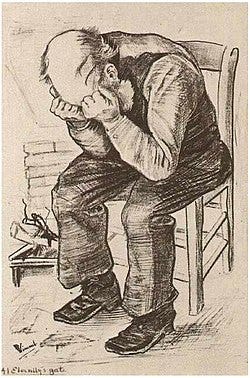
I am a great fan of vulnerability. I find myself singing its praises to people most days. I can be fierce about this. Van Gogh is said to have remarked, of a man in a chair who was weeping, that he was the most beautiful thing he had ever seen. What counters the D-words is remembering vulnerability — our own, and that of others — in a world that so often encourages hardening.
To see and be moved by vulnerability: the simplicity, joy and innocence of a child. To remember that we were vulnerable once, and that we still are inside. To not be afraid of our own tears or those of others. Tears remind us that we are alive. To tenderly honour ourselves and our own efforts when we wake frightened or sad. To learn to believe we are worthy and beloved in the midst of all this.
In my work, people are often determined to change the legacy they have inherited. They want not to carry on treating themselves as they were treated. They explore forming new relationships with their vulnerable selves, especially when they have been hammered by life. But this can be hard, and one way does not suit everyone.
Imagination is key to change. They might imagine carrying their sad or wobbly selves around in a papoose between sessions, rather like a small baby who needs holding and care. Others deliberately watch television programmes about rescue animals, allowing themselves to connect empathically with distressed and frightened creatures. It can be easier to recognise vulnerability outside ourselves — in a baby chick scuttling about — than to imagine our own vulnerability, the childlike part inside us that still needs attention, protection and kindness.
What can we do about the D-words, when we see so much evidence of the worst of humanity outside us in systems, in power, in the stories we are exposed to — that we feel powerless to stop?
Taking time to remember what moves and softens us matters. “Love is a four‑letter word spelt T‑I‑M‑E”, said Holocaust survivor and psychotherapist Dr Edith Eger.
What we spend time and devotion on grows. It likes the attention. Noticing the good, and spending time nurturing what we trust in and value, is not weak. It is a choice. It is a way of strengthening what is human when much around us feels harsh and destructive. It is the true meaning of strength.
So, what are some words that might act as antidotes? Here are some I’ve chosen to focus on that deliberately don’t start with D:
Protection. People. Gentle. Tender. Elevate. Listen. Think. Slow. Relationship. Together. Reflect. Build. Trust. Hope. Share. Justice. Collaborate. Peace.
And one that does: Dream.
This really captures the paradox of vulnerability in healing work. The papoose metaphor is spot-on because its about actively choosing to cradle ourselves instead of abandoning the wounded parts. Been working thru something similar lately and realising the hardest thing isnt acknowledging the damage but actualy giving ourselves permission to tenderly protect those fragile pieces. Its way easier to harden up or project strength than to sit with that raw vulenrability.